Buy и.pl ?
We are moving the project
и.pl .
Are you interested in purchasing the domain
и.pl ?
domain@kv-gmbh.de · 0541-91531010
Buy и.pl ?
What is a resultant wave in physics?
In physics, a resultant wave is the combination of two or more individual waves that are superimposed on each other. When waves with different amplitudes, frequencies, or phases overlap, they create a new wave pattern known as the resultant wave. The properties of the resultant wave, such as its amplitude, frequency, and phase, are determined by the properties of the individual waves that combine to form it. Resultant waves are important in understanding phenomena such as interference, diffraction, and standing waves. **
What is the resultant of a triangular load?
The resultant of a triangular load is the single force that can replace the distributed load while producing the same effect on the structure. It is the equivalent concentrated force that acts at a specific point on the structure. The magnitude and direction of the resultant force depend on the shape and intensity of the triangular load. Calculating the resultant force is important in structural analysis to simplify the analysis of complex loads. **


Similar search terms for Resultant
Top-Angebote
Products related to Resultant:
-
MegaChef 10in1 Electronic Multifunction 360 Degree Hot Air Technology Countertop OvenWith the MegaChef Electronic Multifunction 3600 Degree Hot Air Countertop Oven, you can do so much more. Beautifully engineered design has convenience and precision in mind with 10 preset functions that will take the guessing game out of cooking.214,49 $*Shipping: 0,00 $Secure redirect to the provider
-
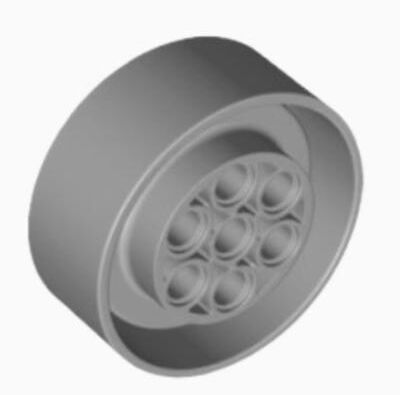
Lush Living Finds Perforated Brick Assembly Toy Accessories With Technology Mechanical Wheels Perforated Brick Assembly Toy Accessories With Technology Mechanical WheelsEnhance Creativity with Technology Mechanical Wheels Unlock the power of innovation with our technology mechanical wheels, designed specifically for perforated brick assembly toy accessories. Whether you are a hobbyist or a seasoned builder, these...43,97 $*Shipping: 0,00 $Secure redirect to the provider
-
Klutz: LEGO GadgetsThis activity kit will have you building 11 machines including a gravity powered car and a wacky boxing robot. The fun doesn't stop once you've completed all of the projects in the book - open-ended prompts will inspire you to continue experimenting...24,99 $*Shipping: 0,00 $Secure redirect to the provider
-
Multisell Products Hub Magnetic Bottle Opener For Household Mineral Water Plastic Beverage Bottles And Cap Opening, Kitchen Accessories Gadgets whiteEffortless Cap Opening for Everyday Kitchens Upgrade your routine with this 1 pcs Kitchen Accessories Gadgets Magnetic Bottle Opener for Household Mineral Water Plastic Beverage Bottles and Cap Opening designed for convenience and comfort. It makes...34,97 $*Shipping: 0,00 $Secure redirect to the provider



-
What is the angle when two forces form a resultant?
When two forces form a resultant, the angle between the two forces can be found using the law of cosines. The angle can be calculated using the formula: cos(θ) = (F1^2 + F2^2 - R^2) / (2 * F1 * F2), where F1 and F2 are the magnitudes of the two forces and R is the magnitude of the resultant force. This angle represents the direction of the resultant force in relation to the original forces. **
-
What formula do I use to calculate the resultant force?
To calculate the resultant force, you can use the formula: Resultant force = √(Fx^2 + Fy^2) Where Fx is the force in the x-direction and Fy is the force in the y-direction. This formula is derived from the Pythagorean theorem, which states that the magnitude of the resultant force is equal to the square root of the sum of the squares of the individual forces in each direction. **
-
What is the resultant vector with two lengths and angles?
The resultant vector with two lengths and angles is the single vector that represents the combined effect of the two original vectors. To find the resultant vector, we use the parallelogram law of vector addition, which involves adding the two vectors tip to tail and then drawing the diagonal of the parallelogram formed. The length and angle of the resultant vector can be calculated using trigonometric functions such as sine and cosine. This resultant vector represents the combined effect of the original vectors in terms of both magnitude and direction. **
-
What is the graphical resultant force of more than 3 forces?
The graphical resultant force of more than 3 forces is found by using the polygon method. This method involves drawing the forces as vectors with their tails at the same point, and then completing the polygon by drawing the final side from the head of the last vector to the tail of the first vector. The resultant force is then the vector that closes the polygon. This method allows us to find the magnitude and direction of the resultant force by using vector addition. **


How do you calculate the resultant force without using the cosine law?
To calculate the resultant force without using the cosine law, you can use the Pythagorean theorem. First, you would calculate the horizontal and vertical components of the forces. Then, you would use the Pythagorean theorem to find the magnitude of the resultant force by taking the square root of the sum of the squares of the horizontal and vertical components. Finally, you can use trigonometric functions to find the direction of the resultant force. **
How do you calculate the resultant forces F1 and F2 in Newtons in physics?
To calculate the resultant forces F1 and F2 in Newtons in physics, you need to first determine the individual forces acting on an object. Once you have identified these forces, you can use vector addition to find the resultant force. This involves adding the forces together taking into account their direction and magnitude. The resultant force F1 and F2 can be calculated using the formula F = F1 + F2, where F is the resultant force. **
Top-Angebote
Products related to Resultant:
-
Rare Purchases Piece Repair Tool Kit With Torx Screwdrivers For Digital Devices And Gadgets magnetismIntroducing our Multifunctional Precision Screwdriver Set, the essential tool kit for anyone who works with digital devices. Whether you're repairing a phone, tablet, PC, or any other gadget, this versatile tool set provides all the necessary...49,97 $*Shipping: 0,00 $Secure redirect to the provider
-
Inspired Deals Metal Key Lock Switch IP54 Electronic Key Switch For Secure Panels And Devices Metal Key Lock Switch IP54 Electronic Key Switch For Secure Panels And DevicesBuilt for reliability and control, this compact electronic key switch gives you a simple, secure way to manage access to your devices and systems. Designed with a durable metal knob and precise locking mechanism, its ideal for DIY electronics,...34,97 $*Shipping: 0,00 $Secure redirect to the provider
-
MegaChef 10in1 Electronic Multifunction 360 Degree Hot Air Technology Countertop OvenWith the MegaChef Electronic Multifunction 3600 Degree Hot Air Countertop Oven, you can do so much more. Beautifully engineered design has convenience and precision in mind with 10 preset functions that will take the guessing game out of cooking.214,49 $*Shipping: 0,00 $Secure redirect to the provider
-
Lush Living Finds Perforated Brick Assembly Toy Accessories With Technology Mechanical Wheels Perforated Brick Assembly Toy Accessories With Technology Mechanical WheelsEnhance Creativity with Technology Mechanical Wheels Unlock the power of innovation with our technology mechanical wheels, designed specifically for perforated brick assembly toy accessories. Whether you are a hobbyist or a seasoned builder, these...43,97 $*Shipping: 0,00 $Secure redirect to the provider
-
What is a resultant wave in physics?
In physics, a resultant wave is the combination of two or more individual waves that are superimposed on each other. When waves with different amplitudes, frequencies, or phases overlap, they create a new wave pattern known as the resultant wave. The properties of the resultant wave, such as its amplitude, frequency, and phase, are determined by the properties of the individual waves that combine to form it. Resultant waves are important in understanding phenomena such as interference, diffraction, and standing waves. **
-
What is the resultant of a triangular load?
The resultant of a triangular load is the single force that can replace the distributed load while producing the same effect on the structure. It is the equivalent concentrated force that acts at a specific point on the structure. The magnitude and direction of the resultant force depend on the shape and intensity of the triangular load. Calculating the resultant force is important in structural analysis to simplify the analysis of complex loads. **
-
What is the angle when two forces form a resultant?
When two forces form a resultant, the angle between the two forces can be found using the law of cosines. The angle can be calculated using the formula: cos(θ) = (F1^2 + F2^2 - R^2) / (2 * F1 * F2), where F1 and F2 are the magnitudes of the two forces and R is the magnitude of the resultant force. This angle represents the direction of the resultant force in relation to the original forces. **
-
What formula do I use to calculate the resultant force?
To calculate the resultant force, you can use the formula: Resultant force = √(Fx^2 + Fy^2) Where Fx is the force in the x-direction and Fy is the force in the y-direction. This formula is derived from the Pythagorean theorem, which states that the magnitude of the resultant force is equal to the square root of the sum of the squares of the individual forces in each direction. **
Similar search terms for Resultant
-
Klutz: LEGO GadgetsThis activity kit will have you building 11 machines including a gravity powered car and a wacky boxing robot. The fun doesn't stop once you've completed all of the projects in the book - open-ended prompts will inspire you to continue experimenting...24,99 $*Shipping: 0,00 $Secure redirect to the provider
-
Multisell Products Hub Magnetic Bottle Opener For Household Mineral Water Plastic Beverage Bottles And Cap Opening, Kitchen Accessories Gadgets whiteEffortless Cap Opening for Everyday Kitchens Upgrade your routine with this 1 pcs Kitchen Accessories Gadgets Magnetic Bottle Opener for Household Mineral Water Plastic Beverage Bottles and Cap Opening designed for convenience and comfort. It makes...34,97 $*Shipping: 0,00 $Secure redirect to the provider
-
GlowBake Spudger Pry Repair Tool Kit For Phone Tablet PC, Opening Screwdriver Disassembly Set For Mobile Electronic Devices 14 In 1Unlock professionallevel repairs with this 22 in 1 Repair Opening Tools Kit Spudger Pry Screwdriver Set your essential companion for disassembling mobile phones, tablets, laptops, and other electronic devices safely and efficiently. Whether you're a...21,97 $*Shipping: 0,00 $Secure redirect to the provider
-
Rare Purchases Piece Repair Tool Kit With Torx Screwdrivers For Digital Devices And Gadgets hand TwistIntroducing our Multifunctional Precision Screwdriver Set, the essential tool kit for anyone who works with digital devices. Whether you're repairing a phone, tablet, PC, or any other gadget, this versatile tool set provides all the necessary...39,97 $*Shipping: 0,00 $Secure redirect to the provider
-
What is the resultant vector with two lengths and angles?
The resultant vector with two lengths and angles is the single vector that represents the combined effect of the two original vectors. To find the resultant vector, we use the parallelogram law of vector addition, which involves adding the two vectors tip to tail and then drawing the diagonal of the parallelogram formed. The length and angle of the resultant vector can be calculated using trigonometric functions such as sine and cosine. This resultant vector represents the combined effect of the original vectors in terms of both magnitude and direction. **
-
What is the graphical resultant force of more than 3 forces?
The graphical resultant force of more than 3 forces is found by using the polygon method. This method involves drawing the forces as vectors with their tails at the same point, and then completing the polygon by drawing the final side from the head of the last vector to the tail of the first vector. The resultant force is then the vector that closes the polygon. This method allows us to find the magnitude and direction of the resultant force by using vector addition. **
-
How do you calculate the resultant force without using the cosine law?
To calculate the resultant force without using the cosine law, you can use the Pythagorean theorem. First, you would calculate the horizontal and vertical components of the forces. Then, you would use the Pythagorean theorem to find the magnitude of the resultant force by taking the square root of the sum of the squares of the horizontal and vertical components. Finally, you can use trigonometric functions to find the direction of the resultant force. **
-
How do you calculate the resultant forces F1 and F2 in Newtons in physics?
To calculate the resultant forces F1 and F2 in Newtons in physics, you need to first determine the individual forces acting on an object. Once you have identified these forces, you can use vector addition to find the resultant force. This involves adding the forces together taking into account their direction and magnitude. The resultant force F1 and F2 can be calculated using the formula F = F1 + F2, where F is the resultant force. **
* All prices are inclusive of VAT and, if applicable, plus shipping costs. The offer information is based on the details provided by the respective shop and is updated through automated processes. Real-time updates do not occur, so deviations can occur in individual cases. ** Note: Parts of this content were created by AI.